tara

tara
LA Mayor's Office Acknowledges the NDF's Advocacy with GNEM

Tuesday, April 16, 2013

Extension Study for Phase 2 of Sialic Acid Tablet Announced Not Yet Recruiting

It's official that Ultragenyx will do  an extended study using Sialic Acid Extended Realease starting in June 2013 for the next 3 years. They plan to accept 45 patients.  Please refer to the link below.  Also, the National Institutes are still doing study on Natural History of patients with HIBM and they anre in Phase 1 trial of ManNac.  I would urge patients with HIBM to contact them.

 is not yet open for participant recruitment.

Verified April 2013 by Ultragenyx Pharmaceutical Inc
Sponsor:
Information provided by (Responsible Party):
Ultragenyx Pharmaceutical Inc
ClinicalTrials.gov Identifier:
NCT01830972
First received: April 10, 2013
Last updated: NA
Last verified: April 2013
History: No changes posted
  Purpose
GNE myopathy or hereditary inclusion body myopathy (HIBM) is a severe progressive metabolic myopathy caused by a defect in the biosynthetic pathway for sialic acid(SA). The purpose of the study is to measure long term safety and the effects of Sialic Acid-Extended Release (SA-ER) pills.

ConditionInterventionPhase
GNE Myopathy
HIBM
Drug: SA-ER tabletsPhase 2

Study Type:Interventional
Study Design:Endpoint Classification: Safety/Efficacy Study
Intervention Model: Single Group Assignment
Masking: Open Label
Primary Purpose: Treatment
Official Title:An Open-label Phase 2 Extension Study to Evaluate the Long Term Safety and Efficacy of Sialic Acid-Extended Release (SA-ER) Tablets in Patients With GNE Myopathy or Hereditary Inclusion Body Myopathy

Resource links provided by NLM:


Further study details as provided by Ultragenyx Pharmaceutical Inc:

Primary Outcome Measures:
  • Assess long-term safety of 6000 mg/day SA-ER in HIBM subjects [ Time Frame: approximately 3 years ] [ Designated as safety issue: Yes ]

Estimated Enrollment:45
Study Start Date:June 2013
Estimated Primary Completion Date:June 2016 (Final data collection date for primary outcome measure)
ArmsAssigned Interventions
Experimental: open label, 6000 mg/dayDrug: SA-ER tablets


http://clinicaltrials.gov/ct2/show/NCT01830972?term=hibm&rank=5

Saturday, March 23, 2013

Los Angeles Marathon and Fund Raising for Gene Therapy Research

On the 17th. March I along with thousands were present in Los Angeles to cheer the marathon runners.  My son, a friend, and runners associated with Advancement for Research Myopathy ran in this race to increase the awareness  and raise funds for the research in gene therapy for HIBM.  A friend and I were at mile 17 to cheer the runners.  I felt quite energized to see people running something my legs are unable to do. I raised $ 1,910 via crowdrise to help with research.  Thanks to all who have contributed and those who would like could still contribute to this worthwhile cause on crowdrise.  Donations are tax deductible.  Here are some images from the event on ARM's face book page.
A few of the runners, Andrew, Sandra and Bryan, who began running for HIBM early this morning. Donate and Support today! @ www.crowdrise.com/runforhibm

https://www.facebook.com/#!/curehibm?fref=ts
    p.s. for patients who would like to join a  private group of others with HIBM, there is a group on facebook that is private and patients share their experiences etc., please contact me if you would like to become part of the group.

    Sunday, March 3, 2013

    Dr. Kakkis Attempts to get Big Drug Companies Involved With Rare Diseases

    This is an article about Dr. Kakkis who is the CEO of Ultragenyx, the bio-pharma company that is conducting the clinical trial for HIBM with Sialic Acid.  There is hope that this medicine will stop the progression and help re-energized the muscles.
    p.s. please check my previous post and donate if you can to the cause I doing a fund raising.  Your donation is tax deductible and will help the ARM/HIBM organisation to further gene therapy for HIBM.


    Man with a plan: Emil Kakkis aims to lure big-market drugs toward rare diseases

    Emil Kakkis: "It's so easy for them to do."

    Reporter- San Francisco Business Times
    Email | Biotech tweets | Google+ | Education tweets
    Emil Kakkis is making another run at rare diseases.
    The president and CEO of Ultragenyx Pharmaceutical Inc. and former chief medical officer at BioMarin Pharmaceutical Inc. is laying out a new strategy Tuesday to get more drugs into children with rare diseases. Under the banner of the EveryLife Foundation for Rare Diseases, which Kakkis founded and has largely bankrolled, he is proposing that companies with already-approved, big-market drugs be rewarded with a two-month extension of that drug’s patent life if it wins a new Food and Drug Administration-approved label in an orphan disease.
    “What if every, single blockbuster cancer drug had three or four pediatric indications in development to gain patent extensions for the whole franchise?” Kakkis wrote in an email.
    It isn’t just random wondering for Kakkis, who at UCLA co-discovered a treatment for the lysosomal storage disease MPS and followed the drug to San Rafael-based BioMarin (NASDAQ: BMRN). He left BioMarin a dozen years later to start Ultragenyx, which has raised more than $120 million over the past two years and will complete three Phase II studies in rare diseases this year.
    Kakkis’ plan makes sense for drug makers, he said, because those companies already have expertise in the drugs, can move development along quickly and can be rewarded with an important extra few months of no-competition sales of the drug for its main use.
    “It’s so easy for them to do, and the value is so significant,” Kakkis said in an interview. “It’s an efficient way to generate real improvement. There’s no new manufacturing process or toxicology process or trying to figure out the indication.”
    For patients, Kakkis estimates that research into hundreds of patented drugs will be reopened for uses in rare diseases. What’s more, the drugs likely would cost less than the $200,000-and-up price of many of today’s start-from-scratch rare disease treatments, because much of the safety and toxicology work will have already been done.
    And for Kakkis’ Novato company? Nothing.
    “I’m trying to do the right things,” Kakkis said. “It doesn’t solve all rare diseases. It solves some of them that can use a common drug.”
    It’s no accident that Kakkis is laying out his plan around Rare Disease Day, which is Thursday, and this week's Rare Disease Legislative Advocates conference in Washington, D.C. Some 150 advocates are expected to visit their elected leaders on Capitol Hill, compared to 70 last year.
    “The rare disease lobby is getting stronger and more vocal,” Kakkis said.
    Indeed, patients, caregivers, doctors and researchers made their voices heard in FDASIA, last year’s legislation that laid out the fee structure for seeking approval of their drugs. The legislation established a new Office of Drug Evaluation, specifically for biochemical and genetic diseases, and created new criteria that could accelerate approvals for rare disease treatments.
    Still, it’s not enough, said Kakkis, who recently committed $400,000 of his own money to the EveryLife Foundation.
    Kakkis is laying out his plan as a 2.0 version of the “Cure the Process” campaign that was launched in spring 2009. Along with patent extensions, he wants to “rationalize” safety testing, aligning U.S. guidelines with those in Europe. The EveryLife Foundation also is writing up its version of accelerated approval guidelines that it hopes the FDA will adopt.
    “The people who do the work win,” Kakkis told supporters at a fundraiser before last month’s J.P. Morgan Healthcare Conference. “Patients need it. We all need it.”
    Ron Leuty covers biotech, higher education and China for the San Francisco Business Times.

    Sunday, February 17, 2013

    A Fund Raising I am Participating in to Speed up a Cure for HIBM

    Please click on the link below to donate to this cause.
    http://www.crowdrise.com/runforhibm2013


    • Tara's Photo
    EVENT DATE: MAR 17, 2013 Los Angeles Marathon
    My name is Tara and  I have been suffering from a disease known as Hereditary Inclusion Body Myopathy or HIBM. Over the past 10 plus years, I have  gone from being a very active productive person to now, having to wear leg braces to walk, wheel chair, and other assitive devices to be able to go out of my home.  I also depend on others for assistance.
      It is a very humbling experience to see my physical abilities deteriorate.  HIBM is  a progressively weakening muscle disease and eventually renders those afflicted with it totally unable to physically take care of themselves. HIBM has affected me in my most  productive years and continues.
    Two young men representing me have volunteered to run in the LA marathon to bring increased awareness, and to help raise funds for ARM (Advancement for Research Myopathies) organisation.  In 10 years they have done an amazing job in finding treatments for this disease, and now they have moved research forward to clinical trials with two possible treatments. Patients are testing treatments for this disease! The next step will be gene therapy, and eventually stem cell therapy to bring back lost muscle.... 
     I kindly ask for your support and donations so we can get to human gene therapy trials for HIBM.  One of my hopes is that someday I will be able to walk and even run on my sandy local beach, so I could feel what it's like to walk barefoot on sand again.
    Note: Donations are tax deductible.


    Ultragenyx Will be Recruiting Patients With HIBM for a Natural History Study


    Hereditary Inclusion Body Myopathy-Disease Monitoring (HIBM-DMP): A Combined Registry and Prospective Observational Natural History Study to Assess HIBM Disease

    This study is not yet open for participant recruitment.
    Verified February 2013 by Ultragenyx Pharmaceutical Inc
    Sponsor:
    Collaborator:
    Newcastle University
    Information provided by (Responsible Party):
    Ultragenyx Pharmaceutical Inc
    ClinicalTrials.gov Identifier:
    NCT01784679
    First received: February 4, 2013
    Last updated: February 5, 2013
    Last verified: February 2013
    Purpose
    HIBM is a severe progressive myopathy that typically presents in early adulthood as weakness in the distal muscles of the lower extremities and progresses proximally, leading to a loss of muscle strength and function, and ultimately a wheelchair-bound state. The rate of progression is gradual and variable over the course of 10-20 years or longer. There is a need to better understand the disease-specific features of HIBM to heighten disease awareness; facilitate early diagnosis; identify patients; expand knowledge of the clinical presentation, progression and variation of the disease; identify and validate biomarkers and other efficacy measures; inform on the design and interpretation of clinical studies of investigational products; and eventually to optimize patient management.

    Condition
    Hereditary Inclusion Body Myopathy
    GNE Myopathy
    Nonaka Disease
    Quadriceps Sparing Myopathy (QSM)
    Distal Myopathy With Rimmed Vacuoles (DMRV)

    Study Type: Observational [Patient Registry]
    Study Design:Time Perspective: Prospective
    Target Follow-Up Duration:15 Years
    Official Title:Hereditary Inclusion Body Myopathy-Patient Monitoring Program (HIBM-PMP): A Registry and Prospective Observational Natural History Study to Assess HIBM Disease


    Further study details as provided by Ultragenyx Pharmaceutical Inc:

    Primary Outcome Measures:
    • Characterize HIBM disease presentation and progression over time using relevant clinical assessments of muscle strength and function. [ Time Frame: 3 years ] [ Designated as safety issue: No ]

    Secondary Outcome Measures:
    • Obtain information to better characterize quality of life and understand the timing of significant life changing events in HIBM patients using patient-reported outcomes. [ Time Frame: 3 years ] [ Designated as safety issue: No ]

    Estimated Enrollment:200
    Study Start Date:March 2013
    Estimated Study Completion Date:February 2028
    Estimated Primary Completion Date:February 2016 (Final data collection date for primary outcome measure)
    Groups/Cohorts
    Natural History Prospective Observational Group
    Online Registry Patient Reported Group

    Detailed Description:
    The main objective of this program is to better understand HIBM.
    The specific HIBM Disease Registry's objectives are to:
    • Identify HIBM patients worldwide.
    • Promote awareness and facilitate diagnosis of HIBM disease in the neuromuscular field.
    • Obtain an assessment of the medical history, clinical presentation and progression of disease in HIBM patients and provide a connection for subjects to the broader HIBM community and associated programs.
    • Provide customized information to subjects and their physicians that desire information on their disease status and progression.
    The specific HIBM Natural History Study's objectives are to:
    • Characterize HIBM disease presentation and progression over time using relevant clinical assessments of muscle strength and function.
    • Obtain information to better characterize quality of life and understand the timing of significant life changing events in HIBM patients using patient-reported outcomes.
    • Identify biomarkers and efficacy measures for use as endpoints in future clinical studies.
    Eligibility
    Ages Eligible for Study: 18 Years to 65 Years
    Genders Eligible for Study: Both
    Accepts Healthy Volunteers: No
    Sampling Method: Probability Sample
    Study Population
    Must have a diagnosis of HIBM, GNE myopathy, Quadriceps Sparing Myopathy (QSM), Inclusion Body Myopathy Type 2, distal myopathy with rimmed vacuoles (DMRV), or Nonaka disease.
    Criteria
    Inclusion Criteria:
    • • Must be at least 18 years of age.
      • Must be willing and able to provide electronic consent to release access to medical information to the study sponsor or its agents.
      • Must have a diagnosis of HIBM, GNE myopathy, Quadriceps Sparing Myopathy (QSM), Inclusion Body Myopathy Type 2, distal myopathy with rimmed vacuoles (DMRV), or Nonaka disease.
      • Must be willing and able to comply with all study requirements.
    Exclusion Criteria:
    • For Natural History Component, Any unrelated, comorbid disease or condition that, in the view of the investigator, would interfere with study participation or would affect safety.
    • For Online Registry Component, there are no exclusion criteria
    Contacts and Locations
    Please refer to this study by its ClinicalTrials.gov identifier: NCT01784679

    Contacts
    Contact: John Dittonjditton@ultragenyx.com

    Sponsors and Collaborators
    Ultragenyx Pharmaceutical Inc
    Newcastle University
    More Information

    No publications provided
    Responsible Party:Ultragenyx Pharmaceutical Inc
    ClinicalTrials.gov Identifier:NCT01784679 History of Changes
    Other Study ID Numbers:UX001-CL401
    Study First Received:February 4, 2013
    Last Updated:February 5, 2013
    Health Authority:United States: Food and Drug Administration

    Keywords provided by Ultragenyx Pharmaceutical Inc:
    Hereditary Inclusion Body Myopathy
    GNE Myopathy
    Nonaka Disease
    Quadriceps Sparing Myopathy
    distal myopathy with rimmed vacuoles
    ultragenyx
    rare disease

    Additional relevant MeSH terms:
    Muscular Diseases
    Distal Myopathies
    Musculoskeletal Diseases
    Neuromuscular Diseases
    Nervous System Diseases
    Muscular Dystrophies
    Muscular Disorders, Atrophic
    Genetic Diseases, Inborn

    ClinicalTrials.gov processed this record on February 14, 2013
    http://www.clinicaltrials.gov/ct2/show/NCT01784679?term=hibm&rank=2

    Tuesday, January 22, 2013

    The National Institutes of Health in Bethedsa Maryland, United States Needs a Few More Patients with HIBM to Complete Phase one Trial of ManNac


    Dear Friends from near and far: The National Institutes of Health in the United States of America still needs some more patients who have a diagnosis of Hereditary Inclusion Body Myopathy to complete their phase 1 trial with ManNac, and the natural history study. I have participated in one of their studies and I can attest to the excellent care and state of the art equipment. Their researchers and doctors are beyond comparasion. Because HIBM is rare, we need all the patients with HIBM who are willing to contact NIH and participate in the trials. Here is the description and a link at the bottom of the page. Please feel free to ask me any questions. ClinicalTrials.gov Identifier: NCT01634750 First received: July 3, 2012 Last updated: December 8, 2012 Last verified: September 2012 History of Changes Full Text View Tabular ViewNo Study Results PostedDisclaimerHow to Read a Study Record Purpose Background: - Hereditary inclusion body myopathy (HIBM) is a genetic disorder caused by mutations in a gene called GNE. This gene is responsible for producing a sugar called sialic acid. Low levels of sialic acid may cause muscle problems. Symptoms of HIBM include walking difficulties and muscle weakness, which usually start in a person's 20s or 30s and become worse over time. Researchers are studying a drug called ManNAc. It may be useful for treating HIBM. However, this drug is still being tested. Researchers want to see how ManNAc is absorbed into and removed from the blood. They will not be looking specifically at whether ManNAc can stop or slow the symptoms of HIBM. Objectives: To study how MaNAc is absorbed into and removed from the blood in people with HIBM. To study of safety of ManNAc in people with HIBM. Eligibility: - Individuals between 18 and 70 years of age who have HIBM. Design: Participants will be screened with a physical exam and medical history. Blood and urine samples will be collected. Participants will have a 3 to 4-day inpatient stay for the main part of the study. Participants will be divided into groups of six. In each group, four will take ManNAc and two will take a placebo. Participants will not know which one they will receive. Participants will have a single dose of either ManNAc or placebo. They will be monitored for any possible side effects. Frequent blood samples will be collected during the 4-day stay. No treatment for HIBM will be provided as part of this study. Condition Intervention Phase Hereditary Inclusion Body Myopathy (HIBM) GNE Myopathy Drug: ManNAc Phase 1 Study Type: Interventional Study Design: Allocation: Randomized Endpoint Classification: Safety Study Intervention Model: Parallel Assignment Masking: Double Blind (Subject, Investigator) Primary Purpose: Treatment Official Title: A Phase 1 Randomized, Placebo-Controlled, Double-Blind, Escalating Single-Dose Study to Evaluate the Safety, Tolerability, and Pharmacokinetics of ManNAc in Subjects With GNE Myopathy or Hereditary Inclusion Body Myopathy (HIBM) Resource links provided by NLM: Genetics Home Reference related topics: inclusion body myopathy 2 MedlinePlus related topics: Muscle Disorders U.S. FDA Resources Further study details as provided by National Institutes of Health Clinical Center (CC): Primary Outcome Measures: To evaluate the safety and tolerability of a single dose of orally administered ManNAc to HIBM subjects. [ Designated as safety issue: Yes ] Secondary Outcome Measures: Pharmacokinetics Estimated Enrollment: 22 Study Start Date: September 2012 Estimated Study Completion Date: February 2013 Estimated Primary Completion Date: February 2013 (Final data collection date for primary outcome measure) Arms Assigned Interventions Experimental: ManNac Drug: ManNAc Single dose Placebo Comparator: Placebo Drug: ManNAc Single dose Detailed Description: Hereditary inclusion body myopathy (HIBM) is an autosomal recessive, neuromuscular disorder characterized by progressive muscle weakness with onset in early adulthood. The causative gene, GNE, codes for the bifunctional enzyme uridine diphospho-N-acetylglucosamine (UDP-GlcNAc)-2-epimerase/N-acetylmannosamine (ManNAc) kinase (GNE/MNK), which catalyzes the first 2 steps in the biosynthesis of sialic acid. The subsequent paucity of sialic acid production is presumed to cause decreased sialylation of HIBM muscle glycoproteins, resulting in muscle deterioration. In this Phase 1, randomized, placebo-controlled, double-blind, escalating single-dose study, we propose to provide ManNAc (N-acetyl-D-mannosamine monohydrate) orally as a liquid solution to 3 cohorts of 6 subjects (Cohorts A, B, C) at doses of 3,000 mg, 6,000 mg, and 10,000 mg ManNAc, respectively, or up to the maximum tolerated dose (MTD). The objectives of this study are to evaluate the safety, tolerability, and pharmacokinetics (PK) of a single dose of orally administered ManNAc to HIBM subjects, to identify the MTD of a single dose of orally administered ManNAc to HIBM subjects, and to explore the effect of a single dose of ManNAc on potential pharmacodynamic (PD) markers of HIBM. All subjects will be randomly assigned in a 2:1 ratio to receive ManNAc (n equals 4) or placebo (n equals 2) and the decision to dose-escalate will be the responsibility of the Safety Review Committee (SRC). Safety will be assessed by adverse events (AEs), clinical laboratory tests, vital signs, physical examinations, and electrocardiograms (ECGs). PK will be assessed for both ManNAc and sialic acid. PD will be assessed by some of the following exploratory biomarkers: serum transferrin sialylation status; plasma glycan profiles; and plasma, white cell, platelet, and urine sialylation status (free and bound sialic acid N-acetylneuraminic acid (Neu5Ac) and cytidine 5-monophosphate CMP-Neu5Ac). Eligibility Ages Eligible for Study: 18 Years to 70 Years Genders Eligible for Study: Both Accepts Healthy Volunteers: No Criteria INCLUSIONI CRITERIA: Subject is 18-70 years, either gender, inclusive. Subject has a diagnosis of HIBM (or IBM2, GNE myopathy, DMRV or Nonaka myopathy) based upon a consistent clinical course and identification of 2 GNE mutations. Molecular confirmation of the diagnosis will be obtained for all subjects in the study. Subject must be willing to stop any treatment with ManNAc, sialic acid, IVIG, and/or other supplements containing sialic acid (eg, St John's wort, sialyllactose) 30 days prior to randomization and remain off such treatment for the duration of the trial. Subject has the ability to travel to the NIH Clinical Center (CC) for admissions. Subject (if a woman of reproductive age) must be willing to use an effective method of contraception for the duration of the trial. Subject provides written informed consent. EXCLUSION CRITERIA: .-.Subject has a severe disease manifestation that would interfere with the ability to comply with the requirements of this protocol. Subject has a psychiatric illness or neurological disease that would interfere with the ability to comply with the requirements of this protocol. This includes, but is not limited to, uncontrolled/untreated psychotic depression, bipolar disorder, schizophrenia, substance abuse or dependence, antisocial personality disorder, or panic disorder. Subject has hepatic laboratory parameters (AST, ALT, GGTP), or renal laboratory parameters (creatinine, BUN) greater than 3 times the upper limit of normal. Subject has a QTcB > 450 msec (males) or QTcB > 470 msec (females). Subject is anemic (defined as two standard deviations below normal for age and gender). Subject shows evidence of clinically significant cardiovascular, pulmonary, hepatic, renal, hematological, metabolic, or gastrointestinal disease, or has a condition that requires immediate surgical intervention. Subject is pregnant or breastfeeding at any time during the study. Subject has received treatment with another investigational drug, investigational device, or approved therapy for investigational use within 4 weeks of initial screening. Subject has a hypersensitivity to ManNAc or in the judgment of the investigator, has a condition that places the subject at increased risk for adverse effects. Contacts and Locations Please refer to this study by its ClinicalTrials.gov identifier: NCT01634750 Contacts Contact: Lea Latham, CRNP (301) 827-9235 llatham@mail.nih.gov Contact: Nuria Carrillo-Carrasco, M.D. (301) 402-2324 carrilln@mail.nih.gov Locations United States, Maryland National Institutes of Health Clinical Center, 9000 Rockville Pike Recruiting Bethesda, Maryland, United States, 20892 Contact: David Draper 301-827-9636 draperd@mail.nih.gov Sponsors and Collaborators National Human Genome Research Institute (NHGRI) National Center for Advancing Translational Science (NCATS) Therapeutics for Rare and Neglected Diseases (TRND) Investigators Principal Investigator: Nuria Carrillo-Carrasco, M.D. National Human Genome Research Institute (NHGRI) More Information Additional Information: NIH Clinical Center Detailed Web Page Publications: Amir SM, Barker SA, Butt WR, Crooke AC, Davies AG. Administration of N-acetyl-D-mannosamine to mammals. Nature. 1966 Aug 27;211(5052):976-7. Argov Z, Mitrani-Rosenbaum S. The hereditary inclusion body myopathy enigma and its future therapy. Neurotherapeutics. 2008 Oct;5(4):633-7. Review. Bork K, Reutter W, Gerardy-Schahn R, Horstkorte R. The intracellular concentration of sialic acid regulates the polysialylation of the neural cell adhesion molecule. FEBS Lett. 2005 Sep 12;579(22):5079-83. Responsible Party: National Institutes of Health Clinical Center (CC) ( National Human Genome Research Institute (NHGRI) ) ClinicalTrials.gov Identifier: NCT01634750 History of Changes Other Study ID Numbers: 120207, 12-HG-0207 Study First Received: July 3, 2012 Last Updated: December 8, 2012 Health Authority: United States: Federal Government ClinicalTrials.gov processed this record on January 21, 2013 TO TOP For Patients & Families For Researchers For Study Record Managers HOME RSS FEEDS SITE MAP TERMS AND CONDITIONS DISCLAIMER CONTACT NLM HELP DESK Copyright Privacy Accessibility Viewers & Players Freedom of Information Act USA.gov http://www.clinicaltrials.gov/ct2/show/NCT01634750?term=hibm&rank=1

    Saturday, December 15, 2012

    Keeping Pace With Adaptive Exercises

    I would like to wish my readers, family, and friends a peaceful holiday season with your loved ones. For this post I thought it would be helpful and informative to post some of the exercises I have been doing over the years. Since childhood, I have always been involved in athletics, yoga, and dancing. After the diagnosis I was told my condition will get worse,and I should not engage in strenuous activities because it would break down my muscles faster. Knowing myself, I know I would have to find exercises that I can do as my abilities decline. Gradually, I transitioned from "Ashtanga" yoga to the swimming pool, and now I have incorporated the swimming pool exercises with weight training, cardio workout and stretching. I have been quite fortunate to find two community colleges that offer these adaptive exercises for people with disabilities. All of these exercises, except for the cardio, I do many repetitions as many as I can do without exhausting my muscles. I feel had it not been for these exercises, I would have declined faster. Photo by R.W.Swan(Alaska)
    These two machines I do my cardio workout on. One is an elliptical and the other is called a Nu Step.
    This machine is a leg press. I have to strap my legs to help them stay together. I add some weights to do this exercise. It helps to strengthen the gluteal and quadricepts muscles. I also feel that my hamstrings get some workout.
    This equipment is called an abdominal press, it helps me to stregthen my core muscles which I think has helped me to maintain mobility over the years.
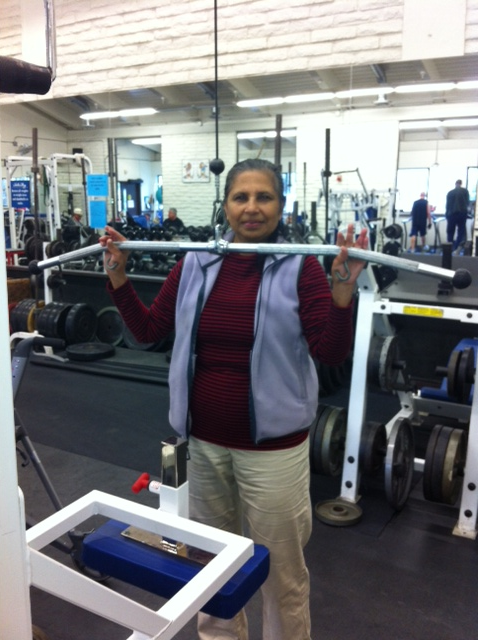
    With this equipment I add some weights and pull it over my head. I also do bending exercises with this one, bending forward as if to pick something off the floor.
    This equipment is a "lateral pull" I also add weights and pull down. I feel a good stretch around my shoulder blades.
    I use this walker to assist me in navigating the exercise room.

    Friday, October 26, 2012

    Rare Disease Connect Globally

    http://www.rareconnect.org/en

    Ultragenyx Presented The Findings of Phase 1 Sialic Acid Extended Release (SA-ER) Trial in Australia

    Ultragenyx, a biopharma company presented their findings on phase 1 Sialic Acid Extended Realease (SA-ER)tablets at 17th. International Congress of the World Muscle Society earlier this month in Perth, Australia. SA-ER is being tested for Hereditary Inclusion Body Myopathy (HIBM). I participated in this clinical trial last year, therefore the findings are quite personal for me. I am currently participating in the phase 2 trial which will be completed late in 2013. Here, I am attempting to provide a narrative/summary of what I understand from their presentation in Perth, Australia. I have posted the links for those interested in charts and technicalities. As a disclosure, please note I am not a doctor, I am patient directly experiencing HIBM. SA-ER were tested on 26 participants with HIBM. Eight were males and eighteen females. The races/ethnicity were 6 Asians, 20 white, (1 Hispanic/Latino 25 Non-Hispanic). No mentioned was made of Persian/Jewish patients. SA-ER was well tolerated at all given doses with minimal side effects. Depending on the dose levels. SA-ER was absorbed and showed steady amount of sialic acid between 8-16 hours after dosing. They tested SA-ER on the patients when they fasted and with food. Sialic Acid seemed to be in higher concentration with the group that took the medicine with their meals. The evening dose was given closer to the night dose because it is stated that at night time there is protein synthesis and muscle repair, therefore the need for Sialic acid is greater. Besides all these explanations, the one statement I am quite encouraged about is "SA-ER should achieve levels of free Sialic Acid that are expected to correct Sialic Acid deficiency and improve sialylation in the muscles of HIBM patients." Please feel free to send me or write your comments. P.S. Ultragenyx is still recruiting patients for phase 2 SA-ER trial in Los Angeles, New York, Missouri and Israel. http://globenewswire.com/Tracker?data=d6QAld4vepVP7jLm-NEJ9Kbhc9rUIVakuLOTfLBZAFBQWdVKFU9oWPygz-Xe6MYU7lR2sMmxIoUktEeY9c1uczF8F3y9N1PAlpg0rBRAAcBCm4Gr3Jebqm5hEQwRnPosqNDEM0K.8gfRAz-dV3zoX4LRDSYvtdfsa90dnfChvbK8uTPDaK0Rjq439Mc8jDUxhxXhAJKWGDA6mn1dWJjfQdcebeW3fMwZ6oeAHOupszvc6Ptu0NFn7AGJbgM%3D http://www.reuters.com/article/2012/10/10/idUS186788+10-Oct-2012+GNW20121010 http://www.wms2012.com/

    Wednesday, October 17, 2012

    National Institutes of Health conducting a Webinar today on Rare Diseases

    For all who are able to tune in to this webinar today at 2.30 p.m. eastern time. Please refer to the links below for more details. Undiagnosed Diseases Program - Community Input webinar 10/17/12 2:30 pm ET Start Time: 10/17/2012 2:30 PM ET Duration: 90 minutes URL: https://webmeeting.nih.gov/udp-community_input/ Conference Number(s): 1-800-201-2375 Participant Code: 471324 The Office of Rare Diseases Research- NCATS and the National Human Genome Research Institute are hosting a webinar to provide information to the patient community about a new NIH initiative to expand the Undiagnosed Diseases Program (UDP). In addition, significant time will be dedicated to discussing the issues listed below. We will use the information discussed to help in the selection process of clinical sites for the expanded UDP. This webinar is not to solicit new patients nor to answer diagnostic questions. The physical and financial costs of the diagnostic odyssey What are the major barriers to obtaining a diagnosis? Ready access to specialists, including: Inablity to see a specialist necessary to help obtain an accurate diagnosis Number of specialists seen in order to get an accurate diagnosis Issues getting specialists to talk to each other (coordinated care) Travel requirements (restrictions or limitations due to disease), including: Number of times have traveled out of town to be seen by a doctor when trying to get an accurate diagnosis Number of times have traveled out of state to be seen by a doctor when trying to get an accurate diagnosis Distance needed to travel ever prevented seeing a doctor to get an accurate diagnosis Farthest distance have traveled in order to be seen by a doctor when trying to get an accurate diagnosis Ease of Access to Newer Diagnostic tests, including Problems gaining access to newer imaging or genetic sequencing tests necessary to get an accurate diagnosis Insurance reimbursement issues for costs related to getting an accurate diagnosis Amount of time required to get tests approved by insurance companies/3rd party payers. http://rarediseases.info.nih.gov/News.aspx http://rarediseases.info.nih.gov/files/UDP-%20Questions%20for%20patient%20focused%20webinar%20Oct-2012.pdf